Fire safety gets a lot of attention in the UK, and rightly so. Sprinklers, extinguishers, emergency lighting, fire doors. Most building owners have at least thought about these. But fire shutters? They tend to get overlooked, and that is a bit of a shame because in certain buildings they are genuinely one of the most useful things you can install.
This is not a scare piece. It is just worth understanding what they do and why, particularly if you run or own a commercial or industrial premises.
So, what is a fire shutter, exactly?
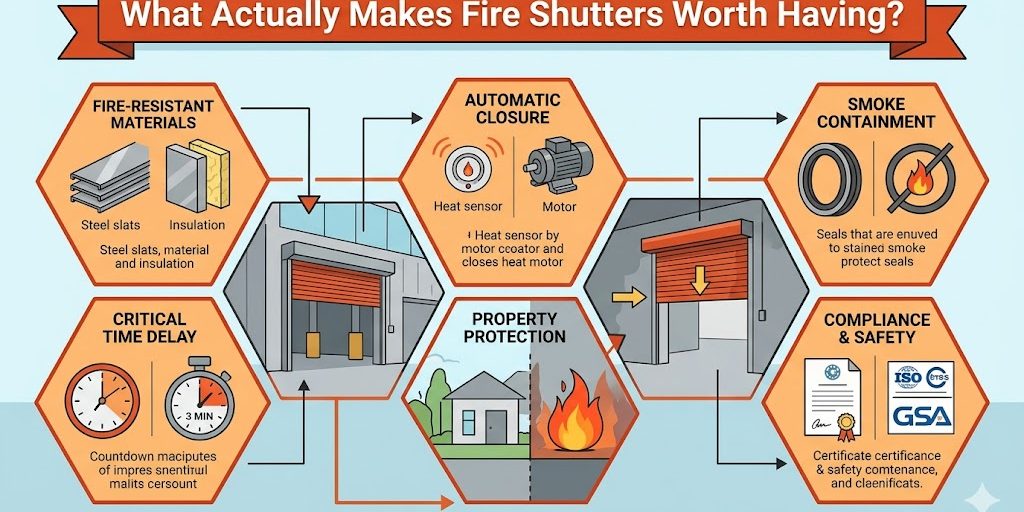
A fire shutter looks a lot like a standard steel roller shutter, and day to day it works the same way. The difference is in how it is built and what it has been tested against. To be certified as a fire shutter in the UK, it needs to meet BS EN 1634-1:2008 and the more recent BS EN 16034:2014, which became the required standard in November 2019.
One thing that catches people out: any shutter that was only tested under the old BS 476 Part 22 is no longer considered compliant. So, if you have fire shutters that have been in place for a while, it is worth checking what they were certified against. We get asked about this fairly regularly.
People sometimes confuse fire shutters with fire curtains. They are not the same thing. A fire curtain is a fibreglass barrier that drops from the ceiling to stop smoke spreading. It offers no security and is not something you would use day to day. A fire shutter is a solid steel product that you can use as a regular security shutter and that will come down automatically when the fire alarm goes off.
Keeping the fire in one place
The main job of a fire shutter is compartmentalisation, which just means stopping a fire from moving freely through a building. If you have ever seen footage of a warehouse fire, you will know how quickly they go. A fire that is contained to one section of a building is a very different problem to one that has spread through the whole thing.
Fire shutters installed across key openings, loading bay doors, internal hatches, connecting corridors, create physical breaks that slow or stop that spread. That gives people more time to get out, and it gives the fire service a much better chance of saving the structure. In a large distribution warehouse or industrial unit, this really matters.
The legal side of things
Under the Regulatory Reform (Fire Safety) Order 2005, whoever is responsible for a non-domestic premises in England or Wales has a legal duty to carry out a fire risk assessment and act on it. In Scotland it is the Fire (Scotland) Act 2005, but the obligations are broadly similar.