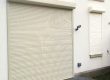
We are going to be honest with you. Most businesses do not think about their roller shutters until something goes wrong. The shutter opens, the shutter closes, job done. It is only when the motor starts grinding at half seven on a Monday morning or the curtain jams halfway up that anyone picks up the phone.
We get it. You have got a hundred other things to think about. But a bit of attention now, at the start of summer, can save you a lot of grief later in the year. Winter is brutal on shutters. Frost gets into the guides, rain works its way behind coatings, and cold temperatures cause all sorts of things to stiffen up and wear in ways that are not always obvious until the warmer months arrive. So here is what we think you should be looking at right now.
Rust. Have a proper look.
Not a glance from ten feet away. Get up close to the bottom rail, the side guides and the lath curtain itself and actually look. Winter moisture finds every tiny chip in the paint or powder coat and gets to work underneath it. By the time you can see rust on the surface, it has often been spreading underneath for a while.
Caught early, surface rust is usually straightforward to treat. Left another season, especially with summer sun accelerating things, and you can end up with structural corrosion that means a full replacement rather than a repair. The bottom rail is the one that tends to suffer most, particularly if it sits close to the ground and gets splashed regularly.
How does it actually feel to operate?
This one is easy to overlook because people get used to their shutter. If it has been a bit stiff or a bit noisy for a while, that becomes the new normal. But stiff and noisy means something is wearing, and the warmer weather does not automatically fix it. What often happens is that lubricants that thickened up in the cold start to thin out as temperatures rise, and suddenly wear that was being masked becomes apparent.
For electric shutters, pay attention to the motor. If it sounds like it is working harder than it used to, or if the shutter has slowed down noticeably, that is the motor telling you something. A motor that is struggling does not get better on its own. It gets worse, and eventually it stops working altogether, usually at the least convenient moment possible.
Walk along the curtain and look at the laths
The individual slats that make up your roller shutter curtain are called laths, and they take a fair amount of punishment over time. Vehicles clip them, things get pushed against them, and cold temperatures can cause them to become brittle and crack. Even a small amount of warping or bending on a lath matters because it creates a weak point in the curtain and because a deformed lath can cause the whole curtain to wind unevenly onto the barrel as it opens.
Close your shutter fully and stand back a bit. The curtain face should look flat and even. Any laths that bow outward or sit at a slightly different angle to the ones around them are flagging a problem worth addressing.
Check the seals, especially on insulated shutters
If you have an insulated roller shutter, the seals do a lot of work. The bottom seal across the full width of the curtain and the brush seals running down the side guides are what keep your building’s temperature inside your building. Rubber seals in particular can crack and harden over a cold winter, and once they are gone, you will feel the difference.
Run your hand along the bottom seal when the shutter is down. It should make firm, consistent contact with the floor. Any gaps you can feel, or any sections where the seal has visibly compressed or split, are worth sorting out. It is one of the cheaper maintenance jobs and one of the more impactful ones in terms of energy costs.
The coating is more important than it looks
People often think of the paint or powder coat finish as cosmetic. It is not. It is the barrier between your shutter and the elements. Once it starts to bubble, peel or flake, the metal underneath is exposed, and summer sunshine is actually more damaging to unprotected metal than most people realise. UV exposure degrades the steel, dark colours absorb heat and cause the metal to expand and contract with every warm and cool cycle, and any moisture that gets under a lifting section of coating finds it very easy to spread.
If you have got areas where the coating is lifting, even small ones, get them seen to now rather than waiting to see how bad they get.
Why bother before summer specifically?
Because summer is when your shutter matters most. Longer trading hours, busier premises, more deliveries, more footfall. A shutter that fails in the middle of a quiet February is inconvenient. A shutter that refuses to close at the end of a busy summer Saturday, or jams open overnight when you cannot get an engineer out until Monday, is a much bigger problem.
In part two of this guide we will be looking at the things summer itself does to shutters, including heat expansion, the uptick in opportunistic crime that longer days bring, and why this time of year is actually one of the best times to think about an upgrade if your current shutter is getting on a bit.
If anything in this article has made you think, give us a ring on 0800 133 7044 or drop us an email at sales@ddrollershutters.co.uk. We cover the whole of the UK and we are happy to take a look.